Tuesday, June 9, 2015

Siberian Journey


Our unforeseen journey to Siberia began seven years ago in a jail Bible study in Mount Vernon, Washington when I met Andrey, a then 21-year-old Russian man who God is now raising up as an evangelist and prophetic voice in far away Siberia.

Andrey grew up in a Russian Pentecostal family that migrated to Washington State when he was twelve years old. In his late teens and early twenties he got involved in drugs, leading to stints in jail and eventually a one-year sentence in Skagit County Jail. There in our weekly Bible studies his faith in Jesus was re-ignited. I watched him grow in faith and clarity of calling from month to month, and advocated for him during his year in immigration detention. 

I have often advocated for immigrants charged with worse crimes than Andrey’s and won “cancelation of removal,” which allows people to retain their permanent residency status. Winning Andrey’s case required the local prosecutor’s cooperation.  Sadly he refused, in spite of widespread community support.

The best legal counsel, a massive prayer effort on the part of his family and church and my own testimony in his trial before a judge I even knew personally did not stop his removal. In 2010 Andrey was “cast out,” perhaps accomplishing Jesus’ instructions to evangelizing disciples to “beg the Lord of the harvest to cast out (ekballo) workers into the harvest” (Luke 10:2). Andrey was deported back to Russia with a lifetime bar to re-entry into the USA.

Andrey and I kept in touch through Facebook, where I learned that he eventually moved to Siberia to attend a Bible school and became active in a network of churches. A few years ago Andrey invited Gracie and I to Siberia, insisting that our approach to ministry was needed there and that his Bishop wanted us to come.

I was reluctant to go to Siberia due to uncertainty about what we’d be doing, an already busy schedule and other reasons. I grew up during the Cold War, when the Soviet Union was America’s number one enemy. I remember as a child hearing that if the Russia communists took over America, they would persecute Christians. This would likely include me being separated from my parents and even being sent to a re-education camp, or maybe even to a prison labor camp in Siberia. I always wondered whether I would hold up under persecution. This childhood fear may well have contributed to some hidden reluctance, which was soon overcome.

Krasnoyarsk was in the heart of the Soviet Gulag, and reputedly has some 45 prisons in the surrounding area. The more Andrey invited us the more Gracie and felt we were being called to go—even if the Russian churches couldn’t cover our travel costs. A week after putting the tickets on our credit card, a generous donor called us out of the blue and offered to pay for our tickets.

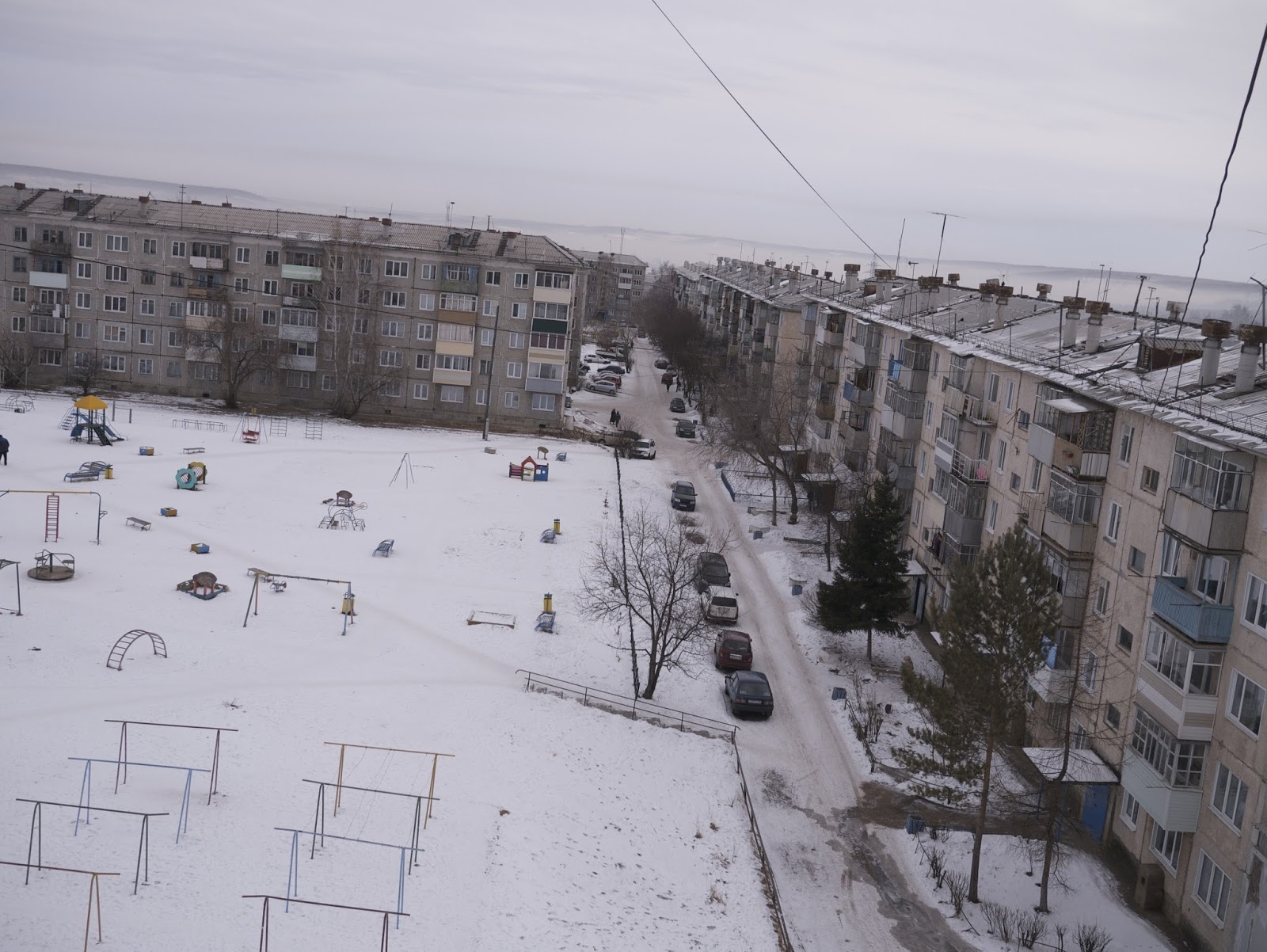
In March Gracie and I flew from Seattle to Bangkok, continuing on to snowy Krasnoyarsk via a seven-hour flight over China and Mongolia. Gracie and I arrived to -22 degree Fahrenheit temperatures, without really knowing what we were getting into. 

We ended up with a fully packed schedule. Andrey drove us from church to church through snowy aspen-covered hills and plains on Siberia’s permafrost-damaged roads, interpreting for us as we ministered together over ten intense days.

The first day we were to speak at a local conference, and were asked to teach on the broad topic of relationships. “What exactly are you hoping for?” we asked, and we were told that people knew almost nothing and needed basic teaching on dealing with gender differences, conflict, and child raising.

Some sixty people showed up in a large log cabin-like structure heated by coal (like every place). In prayer I’d gotten the impression that God wanted to heal people with Hepatitis C. After worship I mentioned this and invited people forward who had this condition. I was shocked to see over half the people came forward, including the five pastors attending the conference. Large numbers of people continued to respond to this same invitation in seven different churches.

We learned that most all of the pastors in this denomination and a large percentage of the people had been heroine addicts, and many had done time in a Siberian prison. The social chaos that ensued right after the fall of the Soviet Union in the early 90s included widespread use of intravenous drugs, and many had contracted Hepatitis C.

We were inspired to learn that twenty-five of the thirty-five churches in the network had their own recovery houses, and the denomination ran a yearlong Bible school that most all of the pastors had attended right after their year in rehab. For two days we taught the fifty or so students in this Bible school, most of whom had come straight there out of recovery houses.

Everywhere we went we prayed for people’s healing of Hep C and many other conditions, hearing report after report of people experiencing either intense heat or pain or pounding in their livers as we prayed, followed by the disappearance of symptoms. While we have yet to hear about blood tests confirming healings, we believe Jesus was healing people’s livers as we saw others get relief from other chronic conditions, and be filled with the Holy Spirit.

We witnessed God healing people’s hearts and freeing people from demonic oppression during ministry times. The pastors told us about the Russian version of fatherlessness due to the approximately 30 million men killed in World War II, in addition to widespread death during Stalin’s purges. Many of the people we were ministering to had been raised by single mothers or by fathers who themselves had not been fathered and had consequent blocks to knowing God as Father.

The last two days were the highlight of our trip as some 250 people gathered for a conference on holistic liberation. We had noticed a young man severely disabled the first day of the conference during worship. He was hunched over from severe scoliosis and he dragged his right leg behind him as he walked, hands clasped tightly.

On the last night we were told to not invite people forward for prayer for Hep C because probably 90% of the people had it. Rather the pastors suggested we have a prayer tunnel formed by the pastors and ourselves. 

That night we prayed for hours as men and women filed between us. We were deeply affected by the condition of the people who came through the prayer tunnel. Many had scars on their heads, their bodies wracked by years of neglect and drug abuse. The young man who was lame passed between us, and we rebuked the plans of the enemy and blessed him.

The next day after our final Sunday service before flying on to South Korea a woman approached us gushing with enthusiasm. Andrey translated for her as she thanked us for praying for her son. “He is now able to bend his leg and his is standing completely straight!” she exclaimed.

The young man was brought to us and we were able to witness first hand the dramatic healing he had experienced the previous night. He showed us how he could bend his leg and back as he stood straight, his hands open. We learned that he had cerebral palsy from birth, and we heard him recount how he’d felt the Holy Spirit connect his brain to his leg and was experiencing a restoration of his memory.

We were moved and inspired by the people and leaders we met, and amazed by Andrey’s growing role as a catalyst for change and now a pastor in a new church plant. Andrey later joined us in Paris for a course on deliverance—eager to learn all he can for his challenging ministry.

We returned home inspired by these Siberian leaders, raised up from the prisons and drug culture to become effective evangelists and pastors. Now they were leading vibrant communities and overseeing recovery houses and “houses of mercy” that take in the most destitute people. We conducted extensive interviews with the church network leader Bishop Maxime (pictured below with us in coal extractor), and a week after returning home he and another leader Sergei even visited us at Tierra Nueva, inspiring us further.

We are now working more deliberately then ever here at Tierra Nueva to raise up ministry workers from the margins through our training here and abroad-- including critical perspectives from recovery programs with inner healing, deliverance and leadership training to see holistic transformation where it’s needed the most.

For more information see www.peoplesseminary.org and http://www.bobekblad.com/category/blog


Wednesday, April 15, 2015

Beach Stories


Today’s Gospel reading from John 21:1-14 shows the resurrected Jesus on the beach with his disciples, who don’t immediately recognize him. He directs these weary fishermen who'd been fishing all night in vain to cast their nets on the right side of the boat. They subsequently fill their nets to overflowing with 153 fish! Jesus is meanwhile cooking up fish and bread for them over a fire on the beach, and invites them to breakfast. John’s Gospel specifies that this was the third time Jesus appeared to his disciples since he was raised from the dead, making me long for new encounters and think back to recent ones.

In mid February Gracie and I went on a vacation to Maui with two other couples and a three-year-old. Late one afternoon I left the group on the beach, feeling a pull to walk and pray. A few minutes down the beach I ran straight into a make-shift tent. A guy invited me in and offered me a hotdog and a drink. He said he was from a local church, and that their pastor was out surfing and would be out of the water soon. A few minutes later I met Pascal, a man in his forties wearing a wetsuit—surfboard tucked under his arm. He briefly told me how he had lived in Maui for years before he was met by Jesus, windsurfing professionally, doing drugs and partying-- like so many others continue to do today. Now he’s reaching out to the surfer crowd through his ministry Eternal Riders and has started a church just off the beach. He invited me to come by the following Sunday.

When I told Gracie and our friends there was interest, and that Sunday morning we visited their church.  I was moved by the passion of their worship, led by Pascal’s Hawaiian wife Cece, and inspired by Pascal’s humility and authenticity. After the service I learned that he was from Quebec and that French was his first language.  When he learned that we spoke French he told us about a church he was launching in Tahiti, suggesting that we should talk about joining them on one of their trips. We met for coffee a few days later and we will see where this connection leads.

The next day Gracie and I were set to cook dinner for everyone, and we had decided to have fish. Since fish was very expensive in our touristy beach town, we’d decided we would need to get our fish at Costco in the larger town of Kahului, a shopping trip I was not looking forward to.

Then on our way back from a long walk on the beach we saw a native Hawaiian casting into the surf. A young woman sat on the beach with her partner’s gear, a big shiny fish laid out in front of her. We asked her where we could find a fish like that and she said we could buy it from her for $10.00. I ran back for some money and a plastic bag and we ate delicious barbequed fresh fish that night.

The next day I was having some alone time, reading the Bible and praying. As I was listening to some worship music I felt a desire to head out to beach. As I worshipped and looked out at the surf I notice a man in a wet suit coming in with a spear gun, dragging a buoy. He would certainly know the kind of fish we had eaten the night before, I thought. I ran down to meet him and showed him a picture of the fish we’d eaten the night before on my phone. He told me the name of the fish, and showed me that the one’s he’d speared were the same.  I took a picture of him with his fish (below) and he told me how he sold fresh fish he spears out of his home in Kahului.  I said goodbye and headed back to our beach house. 
He yelled after me to come back, and I turned around to see him and a woman motioning for me to return. 

“Do you want a fish?” he asked.

I told him I didn’t have any money, but he insisted that he wanted to give me a fish. 

“Are you Christians?” I asked his wife.

“Born again and Spirit filled just like you are!” she responded.

I was really surprised by this response as we had not talked about our faith at all.  I learned that he, Elijah, is from Fuji and she, Jaqui is from Micronesia. They are missionaries who have started a church in Kahului, supporting themselves by selling the fish Elijah spears.

I prayed for them there on the beach, we enjoyed another delicious fish dinner and we have exchanged emails since. I wonder where this encounter will lead, and think with new inspiration about the disciples miraculous catch on the right side of the boat as they paid attention to Jesus’ instructions. What sort of catches is Jesus preparing for us? I wonder. I want to pay attention, and look forward to future adventures, and encourage you to do the same.

Please pray for Pascal and Cece and their ministry with Eternal Riders and church in Paia (first picture below), and for Elijah and Jacqui in their ministry in Kahului (following pictures).

Sunday, February 8, 2015

Bearing arms or bared arm? Jesus as God’s response to violence


Acts of vengeance to vindicate honor have been in the press on a near daily basis this past month, causing me to think seriously about how Jesus exposes and deals with human violence and reveals God’s radical, shame-disarming power.

In the immediate aftermath of Charlie Hebdo’s most recent depiction of the Prophet Mohammed, crowds of Muslims torched Christian churches in Niger, stormed a Christian school in Pakistan, and expressed their outrage toward France and the West in many other places.

The beheadings of two Japanese hostages and the burning alive of a captured Jordanian Air Force pilot by ISIS were followed immediately by Jordan’s execution of two militants and the death of 55 ISIS jihadists in Mosul through airstrikes.

"We are upping the ante. We're going after them wherever they are, with everything that we have. But it's not the beginning, and it's certainly not the end," Jordanian foreign minister Judeh said. 

The US coalition continues to show its power by bombarding ISIS troops, and the cycle of violence will only get worse. How are we to proclaim Jesus as the answer in these dark and violent times?

Isaiah 53 begins with a question posed by people who have heard news that is counter intuitive to the logic of redemptive violence. “Who has believed our report?” they ask, seeming to suggest that not everyone has or will. A second question prepares the reader for a description of God’s saving servant: “Upon whom has the arm of the Lord been revealed?”

The arm of the Lord in the Old Testament is synonymous with God’s power (Isaiah 40:10; 48:14; 51:5) and is the means by which God intervenes in history.  The verb gālâ (translated“ reveal”) means to uncover, expose, or make naked; this verb invites the translation “upon whom has God’s power been uncovered (or bared)?”

The next verses of Isaiah 53 describe God’s naked power visible in a figure who has no form or majesty or attractive appearance, who is despised, forsaken—a man of sorrows who grieves and is not valued.

Unlike the armed forces of this world (the US coalition, Jordan, ISIS, the Israelis and many others), God’s servant bears our grief and carries our sorrows. The servant is even perceived as punished by God (v. 4). Speaking as the exiled prophetic community in the heart of an oppressive empire (Babylon), Isaiah describes God’s servant in ways that prefigure Jesus and show us a way to think about redemptive suffering and shame-bearing:

“But he was pierced through for our transgressions, he was crushed for our iniquities; the chastening for our well-being fell upon him, and by his scourging we are healed. All of us like sheep have gone astray, each of us has turned to his own way; but the Lord has caused the iniquity of us all to fall on Him” (Isaiah 53:6–7).

The first Christians saw Jesus as fulfilling this description of the Lord’s servant. Jesus reveals God’s power by letting humans strip him naked and nail him to a cross—exposing our violence and neutralizing it. He achieves his victory over shame, dishonor and death through submitting to it as innocent victim alongside us and on our behalf.

Before his enemies arrest him, Jesus freely offers his broken body and blood to the disciples around the table, inviting them and us to continue feeding on his vulnerable flesh and lifeblood “in remembrance of me.” He is raised to life by the Father, embodying victory over death and guaranteeing us his abiding presence with us now and forever.

Paul recognizes the offense of Jesus’ way of being Savior when he writes of Jesus’ cross as “foolishness to those who are perishing.”  But, he continues, “to us who are being saved, it is the power of God” (1 Corinthians 1:18).  He goes on to describe how this very different power of God, which he calls “the foolishness of the cross”, is a weapon against the world’s wisdom:  “I will destroy the wisdom of the wise, and the cleverness of the clever I will set aside” (1 Corinthians 1:19).

Jesus reveals God’s embodied wisdom that destroys the conventional wisdom behind ISIS executions, Jordan’s retaliation, the US coalition’s strategy to annihilate ISIS and vengeance in all the forms and the logic of shame that we’re seeing played out throughout our world. 

Those in power in Jesus’ day did not believe in Jesus or his way of saving the world—and we can expect similar resistance today. Jesus identifies himself as the “stone which the builders rejected” (Luke 20:17–18), and all of the Gospel writers take note of this (see John 1:10–11). Believing Jesus is the “cornerstone” of the Kingdom of God requires faith, which is a gift from God that we can choose to receive. 

As I witness the escalation of counter-terrorism efforts in Europe, mob reactions to dishonor and increasing violence and suffering in the Middle East, I find myself feeling drawn to contemplate and talk about the crucified one afresh, rediscovering the effective practice of Paul’s proclamation:

“But we preach Christ crucified, to Jews a stumbling block and to Gentiles foolishness, but to those who are the called, both Jews and Greeks, Christ the power of God and the wisdom of God.  Because the foolishness of God is wiser than men, and the weakness of God is stronger than men.” (1 Corinthians 1:24–25).

Monday, January 12, 2015

I am Not Charlie: a Christian response to the killings in Paris

Officials join hundreds of thousands of people on a Je Suis Charlie march in Nice, France
I was deeply troubled by news of this week’s killings of journalists at Charlie Hebdo, France’s satirical newspaper, by two French Muslim brothers of Algerian descent, Chérif and Saïd Kouachi. I’ve been haunted by footage I saw of these gunmen’s shooting of a police officer in cold blood on a Parisian street where our good friends live and where we regularly stay. The horrific killing of four hostages in the Jewish kosher grocery store by another jihadist activist, followed by the French police’s shooting of all three gunmen, has made this a traumatic week for France and the world.

Should we be surprised by these killings? Offense, resentment, and shame carried by many young Muslim men and others on the margins today incite rage. In this case, the rage is directed against the dishonoring gaze and mocking words of journalism that appears to consider nothing sacred, except free speech. I am not at all saying that these victims had it coming to them or that the perpetrators are in any way justified. Rather I am inviting us to look at this from another perspective.

In the twenty years of my chaplaincy ministry in our local jail and in prisons around the world, I have witnessed the consequences of the exercise of free speech over and over. Exercising your freedom of speech to say whatever you want in a prison context (and many other places too) is possible, but it is not advised, especially if your words increase offense and lead to a sense of powerlessness and shame when the offended one may not have an effective way to respond. If you disrespect someone’s mother, girlfriend, or even fellow gang member, you will likely pay the consequences at some point.

Cartoons of a naked Prophet Mohammed published by Charlie Hebdo, as well as images of the victims of Israel’s recent bombing of Gaza or America’s tortured detainees add to many Muslim people’s experience of being disrespected by the powerful status quo. Chérif and Saïd Kouachi sought to vindicate the honor of Mohammed (and his followers).

Many second generation immigrants, like Chérif Kouachi and his brother (who was orphaned and then raised in France’s foster-care system), experience tremendous alienation growing up in Western European countries as disaffected minorities, and they seek refuge in their identity as Muslims. Chérif Kouachi was reputed to have been first radicalized in his early twenties when he saw images and heard reports of American soldiers torturing Iraqi prisoners in Abu Ghraib prison.

The tremendous violence unleashed on Palestinians by Israelis has radicalized many young Muslims. Attacks on Muslims in Iraq, Syria and Yemen by Americans and their coalition through bombing raids, drone attacks, incarceration and torture is radicalizing many more. And Western media that dishonors Islam or justifies violent actions against it only adds salt to the wounds.

People all around the world have reacted to the massacre at Charlie Hebdo by identifying with the slaughtered journalists, who have come to represent freedom of speech. Masses of mainstream Westerners with signs “I am Charlie” or “We are Charlie” (“Je suis Charlie”; “Nous Sommes Charlie”) are effectively cloning en masse those viewed by Muslims as dishonoring and mocking Islam (see this article).

When many in France and around the world choose to first and foremost stand in solidarity with those champions of freedom of speech such as Charlie Hebdo (the French value of freedom or “liberté”) rather than prioritizing pursuit of communication and mutual understanding with Muslims (the value of brotherhood or “fraternité”), they further dishonor disaffected Muslims, provoking them towards deeper frustration and resentment and increasing violence.

So how might followers of Jesus respond to this escalation of hatred and violence? Jesus warned his disciples: “You will be hearing of wars and rumors of wars. See that you are not frightened, for those things must take place, but that is not yet the end” (Matthew 24:6). Jesus expects his listeners to be aware that history is heading toward increasing tension and to resist the natural tendencies toward hard- heartedness or violence.

“Because lawlessness is increased, most people’s love will grow cold. But the one who endures to the end, he will be saved. This gospel of the kingdom shall be preached in the whole world as a testimony to all the nations, and then the end will come” (Matthew 24:12–14). Anyone listening to Jesus is told to not be fearful, but to get on with the highest priority work—announcing the Gospel of the Kingdom. What is this Gospel?

It most certainly does not include Christians identifying with or justifying swift and effective retaliation, increased surveillance, growing suspicion, incarceration, hatred against Muslims, or fear (nor justifying jihadist violence and justified). When James and John ask Jesus if they should call down fire from heaven to consume the Samaritans who refused them entry as they traveled toward Jerusalem, Jesus rebukes them, saying: “You do not know of what spirit you are of.  For the son of man did not come to destroy men’s lives but to save them” (Luke 9:55–56).

Those following Jesus need empowerment by the Holy Spirit to love our neighbors, to love our enemies, and to actively pursue understanding and reconciliation. This includes first taking the log out of our own eyes through confessing our sin and renouncing our violence. We must refuse our natural proclivity to judge the other, and to seek instead understanding with Muslims or anyone we label an “offender.” Honest communication can happen only when we build relationships.

Now we have an opportunity—to refuse to let our love grow cold or be overcome by evil, but to pursue Spirit-guided ways to overcome evil with good; to refuse to let the light of our Gospel be overcome by the darkness, but to shine brightly, so that all can see the light of the face of Christ—the world’s Messiah Savior.

Now is the time to pray for the families and communities of the dead and for the people of France, for God’s comfort and peace. Prayers for peace for the larger European continent are critical at this time, as anti-immigrant political parties are on the rise everywhere, and the scapegoating Muslims and Jew is likely to increase.

In contrast to the shaming gaze, we must seek to look with the compassion of Jesus, who sees the crowds harassed and helpless, like sheep without a shepherd, and then exclaims: “The harvest is plenty but the workers are few: beg the Lord of the harvest to cast out workers into the harvest.”

Wednesday, January 7, 2015

Epiphany reflection: Recognizing the time of our visitation


Angel David, Tierra Nueva’s Honduran director, has been my friend since I met him in his village of Mal Paso 32 years ago. We talk several times a week about life, Tierra Nueva's coffee farm, and the Bible studies he’s leading.

“Roberto, this story about the magi is beautiful,” he tells me in an unusually animated voice. “We’ve been studying Matthew 2 in the communities, and people love it.”

I ask him what he found most interesting.

“The magi don’t bow down and give gifts to King Herod when they meet him in his palace,” he replied. “They bow before Jesus, a baby from a poor family that nobody important recognized.”

In a country where class divisions separate profesionales (anyone with a high school diploma and above) from gente humilde (humble or poor people) and campesinos (peasants), the magi’s awareness of the high value of Jesus, the humble one, gets people’s attention. In the days of Herod the King they came ready to pledge their allegiance to another, hidden king.

Angel David’s interest piqued mine, prompting me to revisit the story with our two pastors in training, Julio and Salvio.

The story opens with the magi coming to Jerusalem asking: “Where is he who has been born King of the Jews? We saw his star in the East and have come to worship him.” They expect the people in Jerusalem to know about the birth of their king. But King Herod and all Jerusalem were agitated by the magi’s quest for the King of the Jews. Herod, a puppet king of the Jews under Roman occupation, gathers together (Greek synagoall the chief priests and scribes, asking for intelligence on where their Messiah was to be born.

The religious leaders offer their Bible knowledge: Bethlehem is the place. This information facilitates Herod’s later slaughter of all the baby boys two and younger, though the OT Scripture cited in Matthew 2:6 referring to Messiah from Bethlehem describes a commander who is shepherd over God’s people.
“All the chief priests and scribes of the people” they are called. Do they belong to the people (and earthly human powers) more than to God? Or are they betraying the people by complying with the king rather than acting as shepherds. The outsiders, pagan magi (sorcerers, astrologers, astronomers), appear to be the only ones paying attention to God, who is guiding them to the true King.

Today our prophetic vocation is continually at risk of being co-opted by cultural and political forces. Noteworthy in this story is the leaders’ intellectual knowledge of where the Messiah was to be born, combined with their total ignorance that the King of the Jews (their king) has arrived. The pagan outsiders are more in touch with the Spirit. Later, Jesus will address the city of Jerusalem regarding its’ impending destruction “because you did not recognize the time of your visitation (Luke 19:44ff). Do we, too, risk missing our visitation?

King Herod calls for the magi, asking for the exact time of the star’s appearance, and then sends them to Bethlehem on a mission: “Go and search carefully for the child; and when you have found him, report to me, so that I too may come and worship him.”

The magi do not need help from the king or the religious leaders. They “went their way,” and did not search carefully or find Jesus as a result of their inquiry. The star goes before them until it stops over where the Christ was.” Upon seeing the star, the same star they had seen in the East, guide them right to the child king, the wise men rejoice “with exceedingly great joy.”

They are never abandoned in their search, but are personally guided to God’s Messiah. They are not guided by religious leaders or politicians, but by stars that God had created to mark “signs and seasons, days and years” (Genesis 1:14). They, together with the humble shepherds alerted by angels, are the select few witnesses of this first Epiphany. This realization brings them great joy.

When you experience God communicating personally with you to guide you the truth, this results in rejoicing exceedingly with great joy, a quality of joy I long to experience in 2015 and beyond. 

Jesus himself is described as being filled with this joy when he says: “I praise You, Father, Lord of heaven and earth, that you have hidden these things from the wise and intelligent and have revealed them to infants.” (Matthew 11:25). Deliver us, oh God, from the wisdom and intelligence of this world that keeps us in the dark regarding who you are and what you are doing.

When the magi enter the house and see this child who is the true King of the Jews, they fall to the ground and worship him. As Angel David observed, they do not offer their gifts and homage to Herod, the official king of the Jews. Rather they present gifts of gold, frankincense and myrrh to the unrecognized child king, who later dies—rejected by the authorities and the people—between two thieves as “King of the Jews” (Matthew 27:37).

The magi embody the subversive worship of Jesus as King that refuses allegiance to the powers and the people, putting total trust in God’s revelation to discover the good and to avoid evil designs. Rather than reporting back to Herod as ordered, “having been warned in a dream not to return to Herod,” the magi leave for their own country by another way” (Matthew 2:12).

Today I feel inspired by my friend Angel David and by this story to join the magi on “their way.” I want to be led by God’s unusual means to discover and rediscover Jesus, the King of the oppressed and of all people.

I pray for mercy not to be trapped inside the “all” of the religious leaders, who had intellectual knowledge and an audience with the powers, but who missed their time of visitation, the appearance of Jesus. I pray for a movement of Christ followers who are alert to God’s guidance to go “another way,” the way indicated by God, who leads all who are willing to pay attention back to their lands to bear witness to Jesus and his beautiful Kingdom.

Consider attending Towards A New Theology and Practice of Liberation, April, 2015, Paris http://peoplesseminary.org/news-events

Saturday, January 3, 2015

Freedom Not Incarceration

This week marks twenty years that I have served as chaplain to inmates in Skagit County Jail. Embodying and communicating God’s grace and love to prisoners in jails, prisons and immigration detention centers through one-on-one visits, advocacy, Bible studies, and worship services needs to grow in quality and reach in North America and around the world. At the same time, I see the need to expose and counter the lie that incarceration is necessary or redemptive the way we now practice it. 

Protesters in Ferguson, Missouri, and around the nation express outrage fueled by racial profiling and mass incarceration of African Americans and other people of color that has been systemic in the American justice system. Gang activity thrives in prisons and is exported to the streets here and abroad. The fruits of imprisonment are resentment, hatred, vengeance, and exponential violence and death.

Now America is reaping what we have sown nationally and around the world. Recent news that seventeen of Islamic State’s top twenty-five leaders were imprisoned together by US captors in an Iraqi prison in southern Iraq (Camp Bucca) reveals how prison provides an ideal environment for nursing hatred, organizing resistance, and plotting revenge.

The execution of Western hostages by Islamic State demonstrates the wound of shame inflicted by the United States’ post-9/11 incarceration and war-making policies. Western hostages were dressed in orange prison uniforms and handcuffed at their executions, evoking Guantanamo Bay prison clothing and treatment.

The recent release of the CIA torture report documenting the use of clandestine prisons and “enhanced interrogation techniques” (torture) gives us a glimpse into the evil practices underlying widespread hatred against the United States. These practices have continued in more sterile form. The extensive use of drones by the Obama Administration to target and kill America’s enemies is leading to hatred and revenge killings now, and it will lead to an increasingly bitter harvest of chaos and death in the future.

I am continually struck by the clarity of Jesus’ agenda regarding prisoners and enemies. Jesus offers no apologetic for incarcerating, interrogating, torturing or killing. He came to proclaim release to the prisoners (Luke 4:18), echoing his Father’s commitment throughout the Old Testament to bring the oppressed out of slavery and into freedom. Jesus came to save us for our sins, not to punish us. Freeing rather than incarcerating prisoners requires a vast commitment to holistic transformation.

Last week we met with the Skagit County jail chief and lieutenant to discuss ways that Tierra Nueva’s jail ministry can have more access to inmates. We were encouraged by the jail chief’s plans to include rehabilitation programs and greater pastor access to inmates in the new jail.  We clearly need to reform our current jail and prison systems.

In the face of a recent poll showing that 59% of the American public supports the use of torture, I feel called to pray and work for true justice and peace, for God’s Kingdom to come, and for a movement of faith-based reconciliation. Now is the time to proclaim Jesus’ mission of forgiveness and love of enemies, as well as his offer of abundant life for all, including offenders. Now we must seek to not be overcome by evil but overcome evil with good (Romans 12:21).


Sunday, December 14, 2014

Guided to God's Priorities


Last week I returned from a trip to Honduras with my Tierra Nueva colleague, Mike Neelley. There we experienced the Spirit’s guidance towards both the “least of these” and towards church leaders with whom we needed to be reconciled for the sake of Jesus’ Kingdom.

Honduran Tierra Nueva director Angel David Calix had planned that we visit some of his family and our old friends, assuming this would be good.  En route to the village he received calls from his brother who stated he needed to take care of his cattle. Then David learned that his sister-in-law was off to a larger town to receive a remittance from a daughter in Spain. He thought of the parable of the banquet in Luke 14:16-24, where invited guests excused themselves in favor of pressing obligations, causing the host to send out invitations to the poor and the crippled, the blind and the lame along “highways and byways”.  Who then should we visit before our scheduled gathering with the faith community?

As David was considering what we should do he felt God brought to mind people on the extreme margins of his community: an older woman Veneranda, known as the village witch who he’s been reaching out to, her granddaughter Izaguiere, whose husband had died of AIDS and her daughter, Alejandra, both of whom are infected and shunned by the community.  Others came to mind who live on the outer edges of a village that had suffered a massive exodus of over 25 families after eight men had been murdered in a string of vengeance killings. David, Mike and I visited and prayed for a number of families along this trail on our way to the gathering, where we sang, discussed a text from the Bible and prayed (see http://youtu.be/MdmYpiLx4nE). 

Several of people who had once been part of our group stayed in their homes because they are now attending the Baptist church. Pastors prohibit their members from going to any other gatherings, which sadly means that any of our people who attend other churches are under their control and therefore “off limits”.  As I was preparing to travel to Honduras I kept finding myself praying for unity between Christians, and thought that maybe we should seek out some pastors, offering to pray for them in a gesture of reconciliation.

The next day was to be spent in Minas de Oro, going house to house meeting and praying with families who David regularly visits as part of our “Hogares en Transformation” (Homes in Transformation) emphasis. We hiked high into the mountains above the town to meet and pray for Juan Baptista (John the Baptist), a man who had spent his life drinking and fighting, who now is serving as one of David’s right hand men (pictured below). 

I noticed off in the distance a team of oxen yoked to a traditional trapiche, a press used to extract the juice out of sugar cane to make sugar. I wanted Mike to see this operation and asked David if we could take a detour. He said there was time in our schedule to stop by the sugar-making operation. As we were walking I remembered that Doña Petrona, the widow of one of our first Tierra Nueva promoters lived just beyond the trapiche. I asked David if we could visit her place and he agreed. As we approached Petrona’s house her son, a man in his late thirties named Noel, greeted us and offered to escort us to his mom’s adobe house further up the mountain. 

He shared how 32 years before he had accompanied his father to our first course on sustainable farming at our farm on the outskirts of town. He expressed gratitude for Tierra Nueva and then told us that he was the pastor of the Baptist church. This was a total surprise, and I realized that we were being guided by the Holy Spirit right into this important meeting.

As Doña Petrona served us all strong, sweet Honduran coffee we shared Tierra Nueva’s mission to share Jesus’ extravagant love to people on the margins. He said he hadn’t known this was our mission. We offered to pray for him and he was deeply moved, saying that pastors in Honduras rarely if ever have people offer to pray for him or other pastors he knew. I felt a strong confirmation that my sense of urgency about praying for pastors was part of God’s agenda for this trip, which led us to visit Lucho, the pastor of a Pentecostal church in town.  He welcomed our prayers, as did a number of Catholic lay leaders and priests in training, over the next few days.

It was exciting to experience the Spirit’s guidance as we traveled from village to village, from house to house. May you, too, experience God’s guidance as you go about your daily tasks this Christmas season.

Please pray for David as he continues to reach out to pastors, promoting unity in a deeply divided community.  Listen to his description of his mission here http://youtu.be/w_rIVO_uDmY

Pray also pray for healing of Isaguire and her daughter Alejandra and for ongoing conversion for their grandmother Veneranda, as she is now actively turning away from the dark side to Jesus. 

We are seeking to raise $20,000 to build buildings in Mal Paso and Minas de Oro that will serve as a training centers and gathering places for our growing faith communities.  If you would like to contribute you can give electronically through this link: https://www.egsnetwork.com/gift/gift.php?giftid=E4EB2CF9D2AC4AF. Or, you can send donations to Tierra Nueva, Attn: Honduras, PO Box 161, Burlington, WA 98233, USA.